

 CALL
CALL  20 YEARS TRUSTED UK COMPANY
 FREE NATIONWIDE DELIVERY



Thinking about a garden office, a cosy BBQ hut, or a small log cabin for guests? Good news, most small garden buildings are straightforward to install if you follow a few simple rules. In this guide, you will get a clear UK-wide overview of the basics, how height and placement affect permission, what changes when you add plumbing or electrics, and when to speak to your local council. You will also find a quick decision-tree checklist to help you decide your next step with confidence.
At Logspan, we help homeowners, schools, and hospitality sites navigate planning and building control every week. We are always happy to share what typically applies and point you to your council for anything site-specific.
The golden rules: height, placement, and use
Across the UK, permitted development rights allow many outbuildings to be built without a full planning application, provided you meet the standard limits. These vary slightly between England, Scotland, Wales, and Northern Ireland, but the core ideas are similar:
- Height
- Max 2.5m high if within 1m of any boundary.
- Up to 4m with a dual-pitched roof, or 3m with other roofs, when more than 1m from boundaries.
- Placement
- Not in front of the principal elevation facing a highway.
- Extra care in conservation areas, national parks, Areas of Outstanding Natural Beauty, and World Heritage Sites, where limits can be tighter.
- Use
- Incidental to the main dwelling, for example, a home office, a hobby room, a gym, or an occasional guest space.
- Not a self-contained dwelling. No separate address, no continuous residential use without permission.
- Coverage
- Keep overall garden coverage sensible. In England, for example, outbuildings should not cover more than 50 per cent of the land around the original house. Scotland and Wales use similar proportional thinking, even if the wording differs.
If you live in a flat, a listed building, or your house has had permitted development rights removed, you will likely need planning permission.
Do I need planning permission for a garden office?
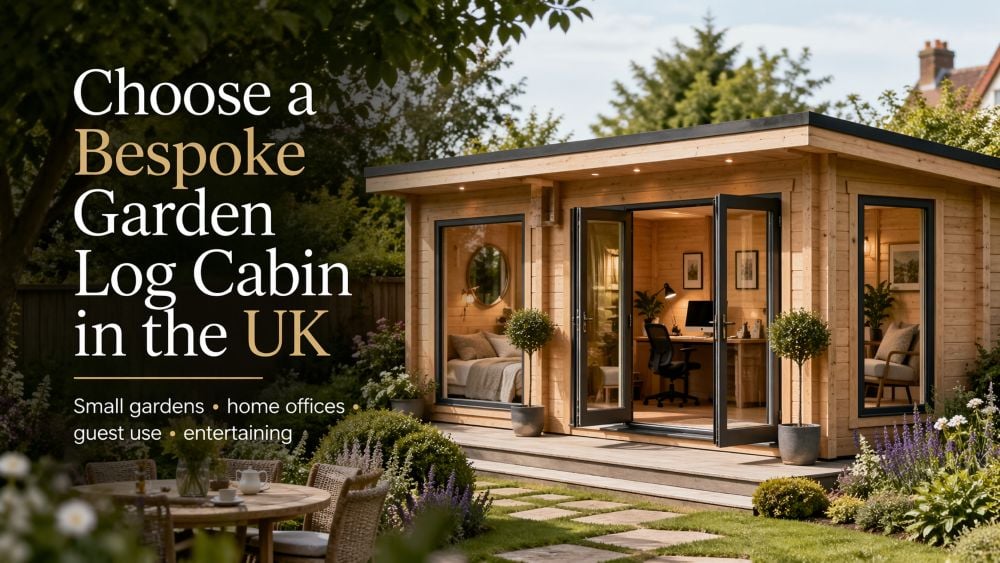
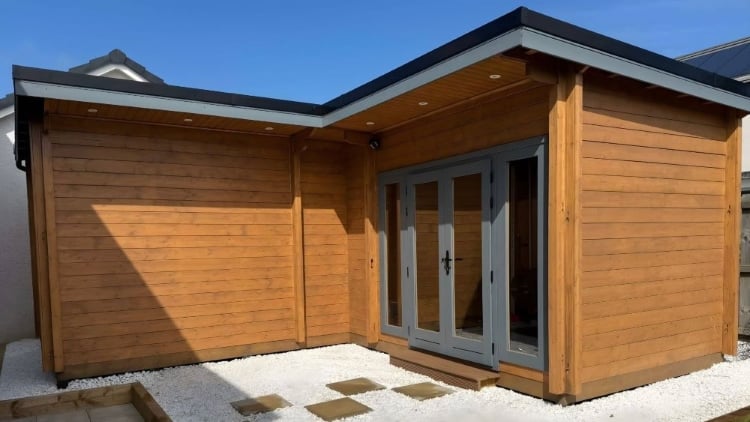
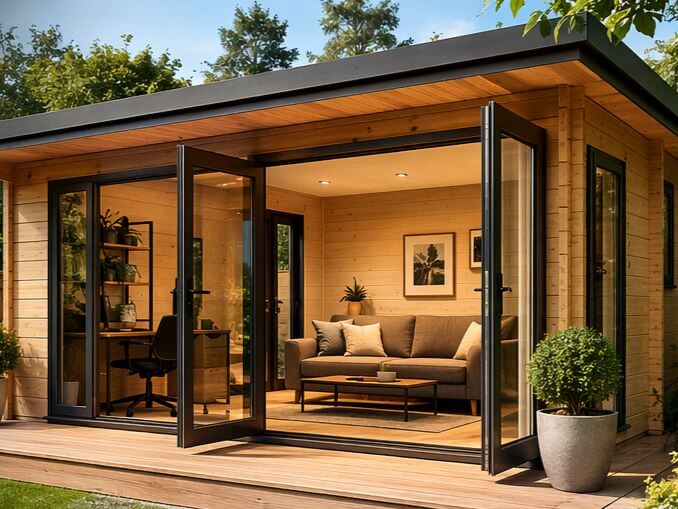
Often, no. If your garden office meets the height and placement rules, is set back from the principal elevation, and is used as a home workspace rather than as a separate commercial premises, it usually falls under permitted development. Keep these points in mind:
- Keep the ridge below 2.5m if near a boundary, or move it further than 2m from the fence to allow extra height.
- Avoid big overlooking windows next to neighbouring boundaries.
- Add electrics via a certified contractor, and ensure safe foundation support.
If clients are visiting regularly, you are adding signage, or you plan to use staff, speak to your council. That moves from incidental to business use and may trigger planning.
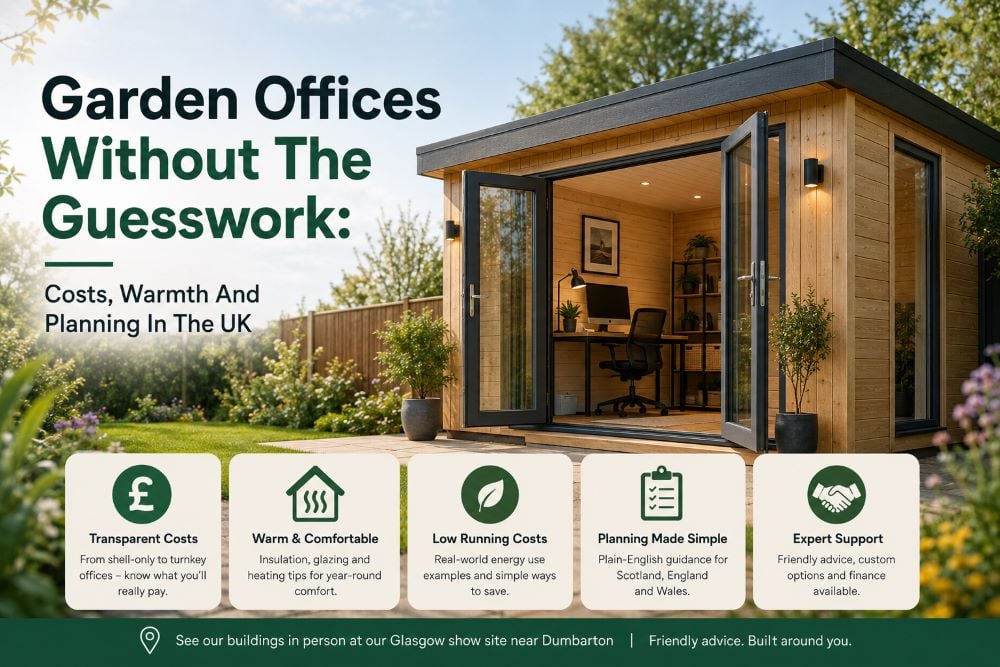
If you are exploring insulated options, have a look at our garden office range. If the following fits naturally into your plans, you can find more inspiration under garden office on our site.
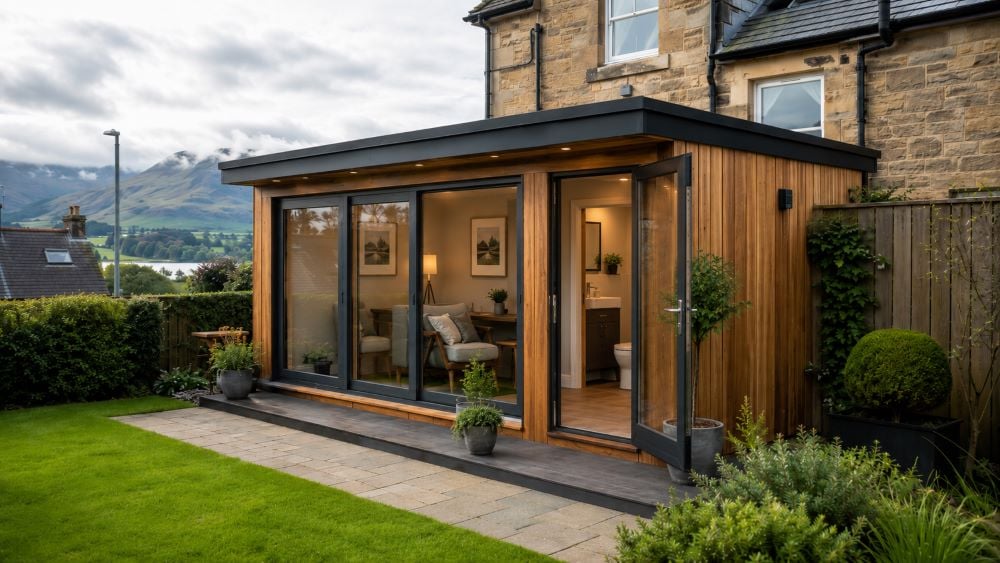
Do I need planning permission for a garden room with a toilet?
Plumbing changes the picture. Adding a WC or shower does not automatically mean planning permission, but it will trigger building regulations approval for drainage and connection to services. Key points:
- Building control
- You will need approval for foul drainage, ventilation, insulation, and electrical safety.
- A new connection typically needs permission to connect to the sewer or a suitable treatment system.
- Planning
- If the room remains incidental, many councils still accept it as an outbuilding under permitted development. If it looks like a self-contained dwelling, expect to apply.
- Practical tips
- Keep it close to the house to simplify trench runs for water and waste.
- Install proper frost protection and ventilation to prevent pipes from freezing and becoming damp.
Do you need planning permission for log cabins?
Most small log cabins that meet the height, placement, and use rules can be installed without full planning permission. The same rules apply as above, especially the 2.5m height cap near boundaries. When cabins become larger, or are used for regular overnight stays, councils may ask for a planning application, particularly if there is a kitchen or bathroom that points to independent living.
If you are browsing options, you can explore log cabins for sale to compare sizes and roof types that make staying under 2.5m easier.
Do you need planning permission for an outdoor classroom?
Many schools install timber outdoor classrooms under permitted development, especially when they are single-storey and sited within the school grounds. However, education sites often sit within planning-sensitive designations, and the intended occupancy numbers, fire strategy, and accessibility can bring building regulations into play. Always do the following:
- Ask your local authority for pre-application advice.
- Confirm whether building regulations approval is required for structure, access, and fire safety.
- Plan hardstanding and access paths for all-weather use and inclusivity.
Logspan supports schools and PTAs with drawings, specs, and practical advice. Start with a chat so we can point you to the correct local process for your area.
Is it legal to build a log cabin in the UK?
Yes, absolutely. You can legally build a log cabin if you respect planning rules, building regulations where applicable, and any covenants on your property. The questions to answer are the ones in this guide: where it sits, how high it is, and what it is used for.
Building control basics: electrics, insulation, fire, and drainage
- Electrics
- All garden buildings with mains power should be installed by a qualified electrician. Certification is essential for safety and insurance.
- Insulation and structure
- If the building is used year-round, consider insulated walls, sealed floors, and quality glazing. This is not always a building control requirement for incidental structures, but it is good practice for comfort and energy efficiency.
- Fire safety
- Maintain clear distances from boundaries and other buildings when possible. Use fire-retardant finishes sensibly and follow the grill or stove manufacturer's clearances.
- Plumbing and waste
- Toilets, showers, and sinks require building control scrutiny and proper connection to the sewer or a suitable alternative system.
BBQ huts and small cabins, what is different?
BBQ huts are usually compact and low, so they often fall within permitted development. Because they include a grill and chimney, you will need to think about:
- Venting
- Use the correct flue kit and keep safe clearances to timber.
- Smoke and neighbours
- Sensible siting away from boundaries and windows keeps everyone happy.
- Fire safety
- Follow the manufacturer's guidance for floor protection, spark guards, and routine maintenance.
If you are in Scotland and considering a model, you can browse barbecue huts Scotland to see sizes that sit comfortably under typical height limits.
Quick decision-tree checklist
Use this simple flow to decide your next move:
- Is your property a house, not a flat or maisonette?
- Yes, continue.
- No, speak to your council first.
- Is the building behind the principal elevation and not forward of the house?
- Yes, continue.
- No, likely planning permission required.
- Will the building be under 2.5m high if within 2m of any boundary, or under 4m dual pitch or 3m mono pitch if further than 2m from boundaries?
- Yes, continue.
- No, adjust the design or prepare a planning application.
- Is the use incidental to the home, for example, office, playroom, gym, hobby, occasional guests, and not a separate dwelling?
- Yes, continue.
- No, planning permission is likely required.
- Are you adding mains electrics?
- Yes, use a certified electrician and retain certificates.
- No, continue.
- Are you adding a toilet or a shower?
- Yes, contact building control for drainage approvals and ensure proper ventilation and insulation.
- No, continue.
- Is your site in a conservation area, national park, AONB, or is the building listed?
- Yes, check with the local authority before you proceed.
- No, you are likely within permitted development.
If at any step you are unsure, keep a simple sketch, dimensions, and photos of your garden, then contact your local planning team or speak to Logspan for guidance.
Region notes you should know
- England
- Permitted development is well defined. The 2.5m near boundary rule is crucial.
- Scotland
- Similar principles, with specific wording under Class 3A. Height and siting near boundaries still matter.
- Wales and Northern Ireland
- Close alignment with the same common sense rules, but always check local guidance notes.
How Logspan can help
From compact garden offices to school outdoor learning spaces, we have decades of experience guiding customers through permitted development, building control, and practical siting. We can provide drawings, specifications, and advice to streamline approvals.
If you are comparing designs and want to keep decisions simple, our team can help you select sizes and roof styles that stay under typical thresholds. If you are planning a Scottish project with a grill focus, you may enjoy browsing bbq huts Scotland for inspiration, and if you are shopping around generally, explore log cabins for sale to see what fits your space.
Ready to talk through your site and get clear next steps? Call 01389 500 505 or email [email protected]. We will give you straight, practical advice and help you move forward with confidence.