

 CALL
CALL  20 YEARS TRUSTED UK COMPANY
 FREE NATIONWIDE DELIVERY


Category: Maintenance Guide
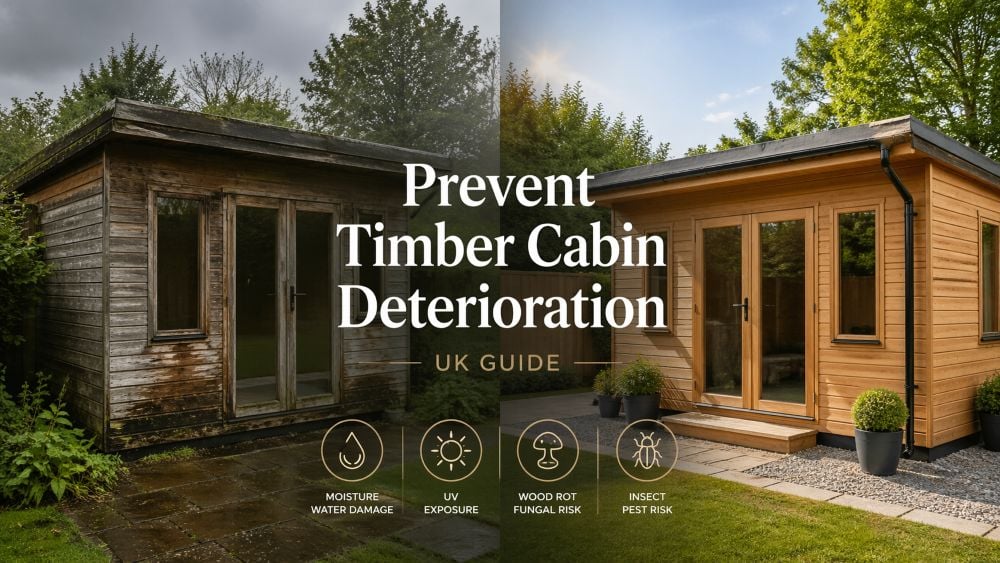
Prevent Timber Cabin Deterioration: UK Guide
Timber garden cabin deterioration usually starts quietly. The building still looks sound from a distance, but small problems are already getting to work. Water sits where it should run off. Sunlight dries and weathers the surface. Airflow is poor. Coatings wear thin. Tiny gaps let moisture creep into vulnerable points. Left alone, those small issues can turn into staining, surface splits, wood rot and decay, swelling, mould, insect activity, and expensive repairs.
The good news is this. Most long-term timber damage is preventable when you understand the cause and deal with it early. This guide explains the main reasons timber garden cabins deteriorate in UK conditions and the exact steps that help prevent long-term damage from moisture and water damage, weathering and UV exposure, fungal and insect infestation, and weak or missed preservative treatments and maintenance.
Quick answer: what causes timber garden cabin deterioration?
The main causes are repeated wetting, trapped moisture, poor drainage, UV weathering, weak maintenance, fungal decay, and insect attack. In simple terms, timber lasts when water is managed, coatings are maintained, vulnerable details are checked, and early warning signs are acted on before damage spreads.
Early warning signs to look for
- Dark staining that does not dry out properly
- Soft patches, crumbling fibres, or spongy timber
- Peeling, flaking, or worn protective finish
- Raised grain, surface checking, or splitting
- Green growth, mould, or persistent damp smell
- Tiny holes and fresh dust that may suggest insect activity
- Standing water near the base or splashback marks on lower boards
1. Moisture is the main driver of deterioration
In UK conditions, water is normally the biggest enemy. Timber does not fail just because it gets wet once. It fails when it stays wet, dries too slowly, or is repeatedly soaked at vulnerable points such as the base, end grain, joints, roof edges, and poorly protected faces.
Moisture problems often come from blocked gutters, roof run-off, splashback from paving, wet ground levels, leaking seals, poor spacing, or vegetation holding damp air against the walls. That is why fixing the source matters more than just brushing on another treatment.
How to prevent moisture and water damage
- Keep gutters, roof edges, and downpipes clear so water is carried away quickly
- Maintain a dry, free-draining area around the cabin base
- Prevent soil, mulch, or paving from trapping moisture against the timber
- Check lower boards, corners, and door thresholds after heavy rain
- Trim planting back so air can move around the building
- Re-seal joints and openings before water starts tracking in
2. Trapped damp leads to wood rot and decay
Rot needs the right conditions to get going, and persistent damp is the big one. Once timber stays wet for long enough, fungi can begin breaking the wood down. That is when deterioration moves from cosmetic weathering into real structural risk.
This is why a timber cabin should not be judged only by what the outer face looks like. Rot often starts where water lingers, airflow is poor, or details have been ignored for too long.
How to reduce the risk of wood rot and decay
- Find and fix the water source first
- Dry the area properly before recoating or repairing
- Replace badly decayed timber rather than trying to hide it
- Treat adjacent sound timber where appropriate after repairs
- Improve ventilation and drainage so the same problem does not come back
3. UV exposure and weathering break down the surface
Sun and weather affect timber even when rot is not present. UV light gradually breaks down the timber surface, causing it to fade, dry out, and weather. Over time, that can leave the surface rougher, less protected, and more vulnerable to moisture uptake if coatings are not maintained.
South-facing and fully exposed elevations usually take the hardest hit. The timber may still be sound underneath, but once the surface protection is neglected, deterioration tends to speed up.
How to reduce weathering and UV exposure
- Use a suitable exterior stain, paint, or finish with preservative protection
- Inspect sun-exposed faces more often than sheltered ones
- Recoat before the finish fails, not after the timber starts absorbing water
- Pay close attention to horizontal surfaces and exposed edges
4. Weak maintenance shortens the life of the whole building
Timber buildings reward steady maintenance and punish neglect. A cabin does not usually fail because of one dramatic event. It fails because small, repeated issues are ignored. A worn coating here. A blocked gutter there. A leaking seal that goes unaddressed for another winter.
Good maintenance is not complicated, but it does need consistency. That is what builds trust with buyers too. A properly maintained cabin looks better, performs better, and usually costs less to own in the long run.
A sensible maintenance routine
- Wash down exterior timber regularly
- Inspect coatings, corners, and lower boards at least seasonally
- Touch up worn areas before damage spreads
- Reapply the chosen finish as needed for exposure level and product instructions
- Keep roof drainage and ground conditions under control
5. Insect activity is often a sign of a moisture problem
Many buyers jump straight to woodworm or insect treatment, but that is only half the picture. Insect activity is often linked to damp conditions. If the timber stays humid and vulnerable, the environment becomes more inviting for attack and the problem can continue.
That means the right response is not panic. It is inspection, confirmation, and fixing the underlying moisture issue alongside any required treatment.
How to reduce fungal and insect infestation risk
- Keep timber dry and well ventilated
- Inspect suspicious holes, frass, or damaged areas rather than guessing
- Do not ignore nearby leaks, splashback, or condensation problems
- Use appropriate professional advice if infestation or decay looks active
6. Poor design details make maintenance harder
Some timber problems start with design or installation details. End grain left too exposed, poor roof overhangs, trapped water at the base, weak drainage, or tight spacing around the building all make deterioration more likely.
This is why high-spec builds matter. Better design and better installation choices make the building easier to keep dry and easier to maintain.
Design and installation choices that help timber last longer
- Allow space around the cabin for airflow and inspection
- Use roof overhangs and drainage details that throw water clear
- Keep the timber clear of persistent wet ground and splash zones
- Protect end grain, joints, and thresholds carefully
- Make future maintenance access easy, not awkward
7. Preservative treatments only work when the rest of the system works
Preservative treatments matter, but they are not magic. They work best as part of a bigger protection system that includes sensible design, correct installation, good drainage, and regular maintenance. If water is allowed to sit against timber year after year, treatment alone will not rescue a badly neglected building.
In other words, treatments support durability. They do not replace basic care.
How to get more from preservative treatments and maintenance
- Follow the product system properly rather than mixing random coatings
- Apply finishes in suitable dry conditions
- Pay extra attention to exposed, horizontal, and splash-prone areas
- Keep a simple record of when the cabin was last cleaned, treated, and checked
A simple UK maintenance plan
Spring
- Wash down the exterior
- Inspect coatings, joints, glazing, and roof edges
- Touch up worn finishes before summer exposure increases
Summer
- Recoat where needed in dry weather
- Check sun-exposed elevations for fading and surface drying
- Keep vegetation cut back
Autumn
- Clear gutters and drainage points
- Check seals, thresholds, and lower boards before winter
- Make sure ground levels and nearby materials are not trapping moisture
Winter
- Watch for standing water, overflowing gutters, and slow drying after rain
- Deal with leaks early rather than waiting for spring
- Keep ventilation paths open
Why this matters when buying a timber garden building
Buyers do not just need a timber cabin that looks good on day one. They need one that is easier to protect over time. That is why build quality, detailing, treatment choices, and aftercare guidance matter so much.
A maintenance-led purchase is usually the smarter purchase. Better timber protection, better drainage details, and better guidance reduce the chance of avoidable deterioration later.
Want a timber cabin that is easier to look after properly?
Speak to Logspan about high-spec timber garden buildings, practical detailing, and the maintenance choices that help protect your investment for the long term.
Frequently asked questions
What causes timber garden cabin deterioration most often?
Repeated moisture exposure, trapped damp, failing coatings, UV weathering, poor drainage, fungal decay, and insect activity are the most common causes.
Can wood rot be stopped once it starts?
Yes, but only if you deal with the moisture source first. Then you can assess what timber can be dried and retained, and what needs replacing.
Does sunlight damage timber cabins?
Yes. UV and weathering gradually break down the timber surface and protective finish, especially on exposed elevations, which is why recoating matters.
Do preservative treatments mean a cabin is maintenance-free?
No. Treatments help, but long-term performance still depends on design, drainage, ventilation, and regular upkeep.
How often should a timber cabin be checked?
A seasonal inspection routine is sensible in the UK, with extra attention after heavy rain, winter weather, or obvious finish wear.