

 CALL
CALL  20 YEARS TRUSTED UK COMPANY
 FREE NATIONWIDE DELIVERY


Category: Buying Guide
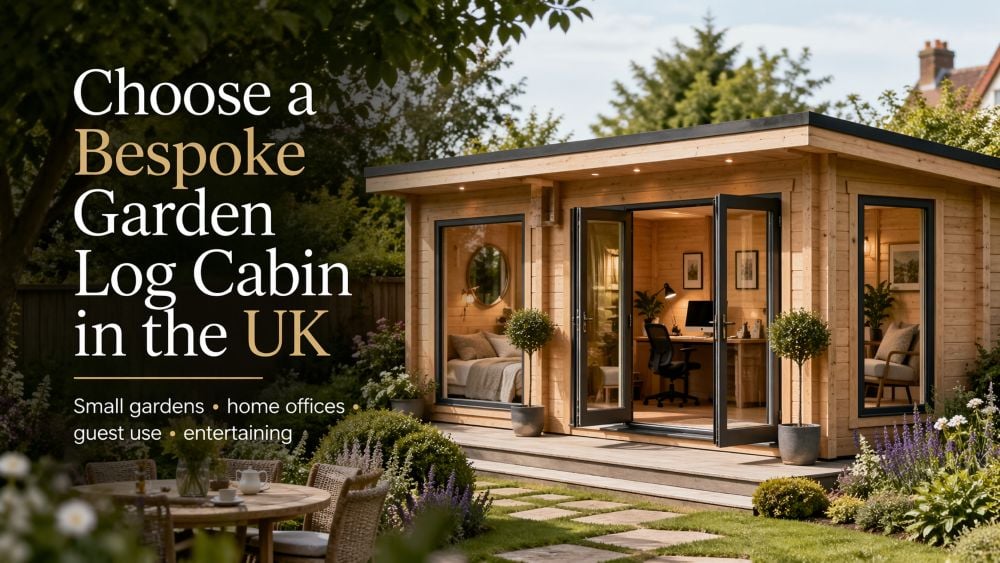
Choose a Bespoke Garden Log Cabin in the UK
The best garden log cabins (UK) buyers choose are not picked by looks alone. They are chosen by use. What job does the building need to do? How much garden can it take up without dominating the space? Does it need to work in summer only, or right through a cold, wet British winter? Is it for focused work, family overflow, occasional guests, or entertaining?
This guide is built to help you answer those questions properly. It compares bespoke timber log cabins by use case, size, insulation, specification, planning considerations, and supplier quality signals, so you can choose the right building with more confidence and less guesswork.
Quick answer: how do you choose the right bespoke garden log cabin?
Start with the main use. Then match the footprint, layout, wall thickness, insulation, glazing, access, and installation approach to that job. A small reading room, a serious home office, an entertaining cabin, and a guest-use cabin should not all be specified the same way.
- Choose the main use first
- Measure the real usable garden space
- Pick the right footprint and layout
- Match insulation and specification to year-round expectations
- Check planning and building considerations before you commit
- Choose a supplier that gives guidance, not just a price
Who this guide is for
- Homeowners who need more usable space without moving
- Families looking at small garden cabin options
- Buyers comparing garden home office cabins
- People considering guest accommodation garden cabins
- Households wanting better garden entertaining cabin designs
- Small business owners working from home who need a proper separate space
Step 1: choose by use case, not by brochure photo
This is the first real decision. Too many people start by picking a style, then try to force that design to do a job it was never properly set up for.
For small gardens
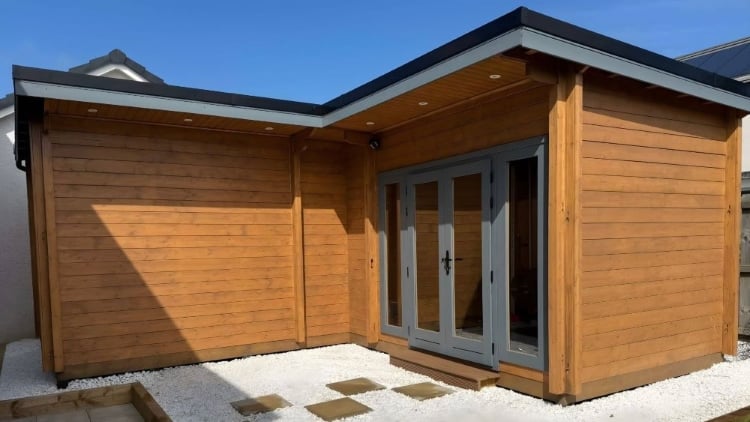
With small garden cabin options, efficiency matters more than size. A cabin that is technically bigger can still be the worse choice if it ruins the garden, blocks light, or leaves no breathing room around it. Corner layouts, tighter footprints, disciplined glazing, and smart door positions usually matter more than showy extras.
For home office use
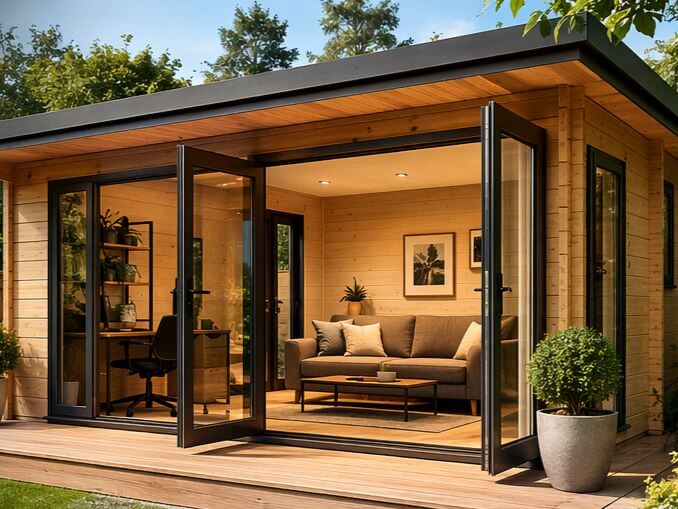
Garden home office cabins need to feel calm, warm, and practical. That means proper wall build-up, sensible insulation, good glazing placement, enough depth for a desk and chair, and electrics planned around real working life.
For guest use
Guest accommodation garden cabins need more thought than most buyers first realise. Privacy, comfort, ventilation, heating strategy, and legal checks all matter more here.
For entertaining
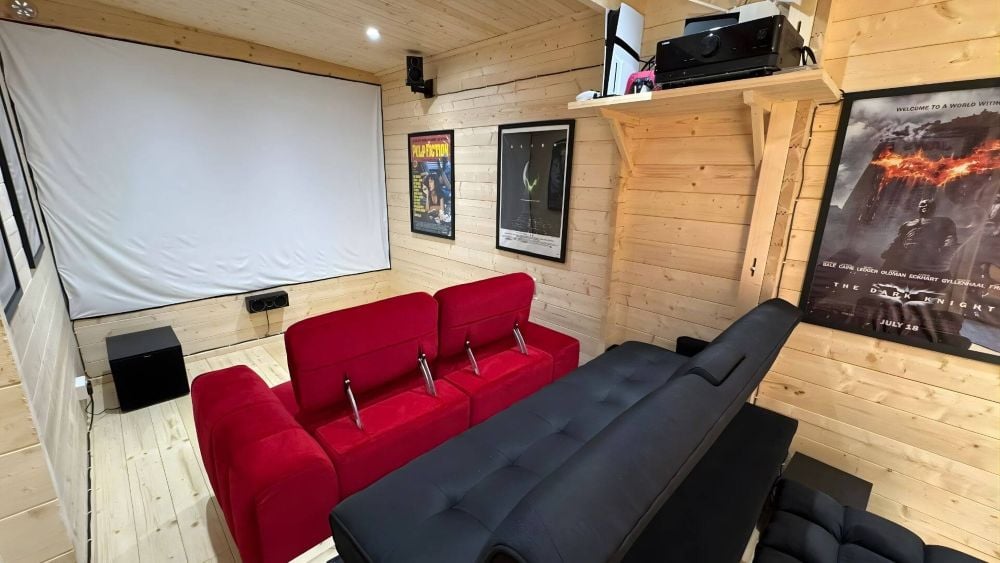
The best garden entertaining cabin designs work as part of the outdoor space, not as a box dropped at the end of the lawn. Flow from house to patio to cabin matters. So do opening widths, seating layout, shelter, and how the room feels in mixed weather.
Step 2: match the size to the garden, not just the wish list
| Garden situation | Best fit | Common mistake |
|---|---|---|
| Small or awkward garden | Compact footprint, efficient layout, controlled glazing | Buying too deep and making the whole garden feel cramped |
| Medium family garden | Balanced cabin size with space left for lawn, patio and movement | Treating the cabin like a separate project from the garden |
| Larger garden | Defined zoning for work, guests or entertaining | Overspending on sheer size when a better layout would do the job |
A simple rule helps here. Leave visual breathing room as well as physical clearance. A cabin should feel like it belongs in the garden, not like it swallowed it.
Step 3: understand insulation and specification properly
This is where good and bad buying decisions often split. A better cabin is not just a thicker wall. It is the whole specification working together. Wall thickness, roof insulation, floor insulation, glazing, draught control, and detailing all affect comfort.
What lighter use needs
A cabin used mostly in fair weather can often work with a simpler specification, provided expectations are realistic.
What year-round use needs
Serious office use, regular entertaining in colder months, or guest use needs a stronger specification. This is not the place to save money in the wrong way.
A practical way to think about it
- Summer and occasional use: basic or mid-level specification may be enough
- Regular multi-season use: stronger wall build-up and better insulation matter
- Year-round office or guest use: treat comfort as essential, not optional
Step 4: get the layout right before you think about finishes
The layout decides whether the cabin feels natural to use. This matters more than colour, cladding stain, or furniture choices.
Questions to ask
- Where will the main door go and how will you approach it?
- Do you need one room or two?
- Will the glazing create light or create glare?
- Do you need wall space for a desk, bed, storage or seating?
- Would a corner format use the plot better?
- How will the cabin connect to the rest of the garden?
Layout priorities by use
Small garden: keep movement simple and avoid over-glazing.
Home office: protect desk wall space, light control, socket positions and storage.
Guest use: think in zones, not just floor area.
Entertaining: prioritise flow, shelter and seating logic.
Step 5: know when bespoke is the right move
Not every buyer needs a fully custom design. Sometimes a strong standard model with the right specification is the smartest buy. Bespoke makes the most sense when the site is awkward, the use is specific, or standard layouts create compromises you will notice for years.
Bespoke usually makes sense when:
- The garden shape is awkward
- Access is tight
- You need a serious home office or high-spec use case
- You want the building to complement the house and garden properly
- Standard glazing or door positions do not work
- You want stronger premium detailing and build options
Step 6: planning and building considerations
This is where you need to stay grounded. In England, outbuildings are often permitted development if they meet the relevant limits and remain incidental to the enjoyment of the house. Planning Portal also says that, in most cases, an outbuilding can be used as a home office without planning permission where the use remains incidental to the main dwelling. Small detached outbuildings may also sit outside normal building regulations thresholds only where there is no sleeping accommodation. That matters for guest-use ideas.
In Scotland, permitted development rules are separate and should be checked against Scottish Government guidance and your local authority. Do not assume England and Scotland work the same way just because the building type looks similar.
Planning questions worth asking early
- Is the intended use clearly incidental to the house?
- Will the height, position and size fit the relevant limits?
- Is the property listed or in a protected area?
- Does any guest or sleeping use change the compliance picture?
- Are electrics, drainage or other services affecting the scope of works?
Step 7: judge the supplier properly
A big mistake is comparing only headline price. Cheap is easy to quote. Harder questions are where good suppliers stand out.
What to look for in log cabin suppliers and premium timber
- Do they help you choose by use case, not just model number?
- Can they explain specification differences clearly?
- Do they offer insulated build options for serious use?
- Are the project photos real?
- Do they talk properly about installation, drainage, access and aftercare?
- Do they stand behind the build with a meaningful guarantee?
My view is blunt. The right supplier behaves more like an advisor than a brochure.
The four best-fit routes
1. Small garden cabin
Choose a controlled footprint, simple layout and disciplined glazing. The goal is calm and usefulness, not bulk.
2. Garden home office cabin
Choose comfort and practicality. Better insulation, real electrics planning and a proper working layout win here.
3. Guest accommodation garden cabin
Choose comfort, privacy and legal clarity. This use needs more thought and should not be treated casually.
4. Garden entertaining cabin
Choose flow, shelter, seating logic and a strong connection to the rest of the garden.
Common mistakes buyers make
- Buying on style before function
- Choosing a cabin that is too big for the garden
- Underspecifying insulation for real year-round use
- Ignoring layout until too late
- Assuming guest use is the same as leisure use
- Comparing only price and not full installed value
Final thought
The right garden log cabins (UK) purchase is not about finding the prettiest picture. It is about choosing a building that suits the way you actually live.
- The right size for the plot
- The right layout for the job
- The right specification for the seasons you will use it in
- The right supplier to guide the process properly
Get those four right and the cabin becomes part of how your home works, not just another thing in the garden.
Need help choosing the right bespoke cabin?
Talk to Logspan about the size, layout, insulation and installation choices that fit your garden and your real use case.
Frequently asked questions
What is the best bespoke garden log cabin for a small UK garden?
Usually one with a disciplined footprint, efficient layout and glazing that creates light without wasting wall space.
Can I use a garden log cabin as a home office in the UK?
In many cases yes, where the use remains incidental to the main dwelling. Exact planning and building requirements should still be checked for your property and location.
Do I need more insulation for a garden home office cabin?
Yes, if you want real year-round comfort. Office use is one of the strongest reasons to upgrade specification.
Can a garden log cabin be used for guest accommodation?
Potentially, but this should be treated as a more serious planning and compliance question than standard leisure use.
What makes a premium timber log cabin supplier different?
Better guidance, clearer specification advice, stronger detailing, better installation thinking, real project evidence and meaningful aftercare.