

 CALL
CALL  20 YEARS TRUSTED UK COMPANY
 FREE NATIONWIDE DELIVERY


Category: Buying Guide
Complete UK Guide to Bespoke Garden Log Cabins
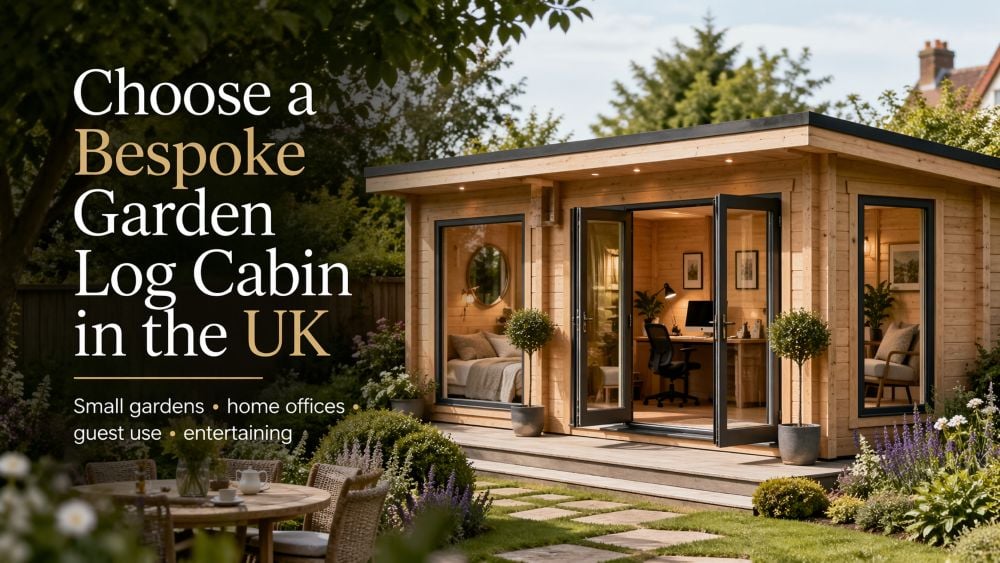
If you are comparing garden log cabins UK buyers actually live with year after year, the right choice usually comes down to five things: garden size, intended use, insulation level, wall thickness, and layout. Get those right first and the style becomes much easier. Get them wrong and even an attractive cabin can end up cold, cramped, or barely used.
For most buyers, the smartest way to choose is to start with the job the building needs to do. A small garden cabin needs to earn its footprint. A home office cabin needs to feel warm, quiet, and practical on a wet Tuesday in January. A guest cabin needs more thought around comfort, privacy, and legal compliance than people often realise.
Quick answer: how do you choose the right bespoke garden log cabin?
- Decide the main use: storage, relaxing, home office, hobby room, or guest space.
- Measure the real usable garden space, not just the empty patch of lawn.
- Choose the layout before the look.
- Match wall thickness and insulation to how often you will use it.
- Check access, base requirements, power, and any planning or building control issues before you buy.
- Then decide whether a fully bespoke design or one of the better pre-designed garden cabin options is the smarter value.
That order matters. Too many people start with a pretty picture and only later realise the doors open the wrong way, the desk does not fit, the garden feels swallowed up, or the building was never specified for year-round comfort.
Who this guide is for
This guide is for:
- UK homeowners who need more usable space without moving
- Families trying to separate work, rest, and home life
- Buyers comparing bespoke timber log cabins with standard off-the-shelf models
- People considering log cabins for small UK gardens
- Buyers looking at garden home office log cabins
- Anyone exploring guest accommodation garden cabins
Step 1: choose by use case, not by brochure photo
The best bespoke garden log cabins are the ones built around a job.
For small gardens
If space is tight, the goal is not to squeeze in the biggest cabin possible. It is to create a building that still leaves the garden feeling like a garden. In small plots, corner layouts, narrower frontages, sliding or outward-opening door choices, and smart window placement matter more than flashy extras.
A small-garden cabin works best when it does one or two things very well. That might be a quiet reading room, a compact studio, or a simple breakout space. If you try to make a small footprint do five jobs, it usually ends up doing none of them properly.
For home offices
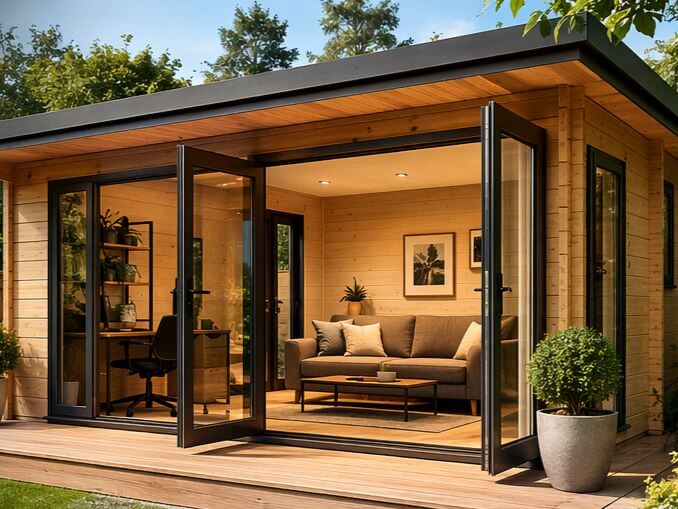
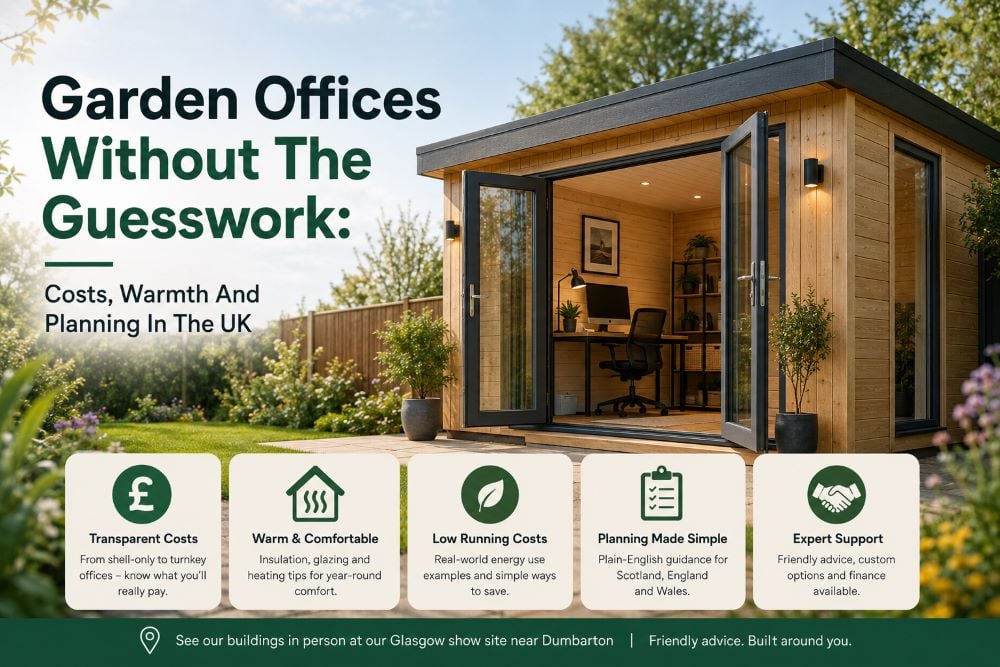
With garden home office log cabins, comfort beats novelty. You need enough wall thickness, proper floor and roof insulation, sensible glazing, lighting, sockets in the right places, and enough depth for a desk, chair, and storage without feeling boxed in. The cabin should support actual working life, not just look good in photos.
For guest accommodation
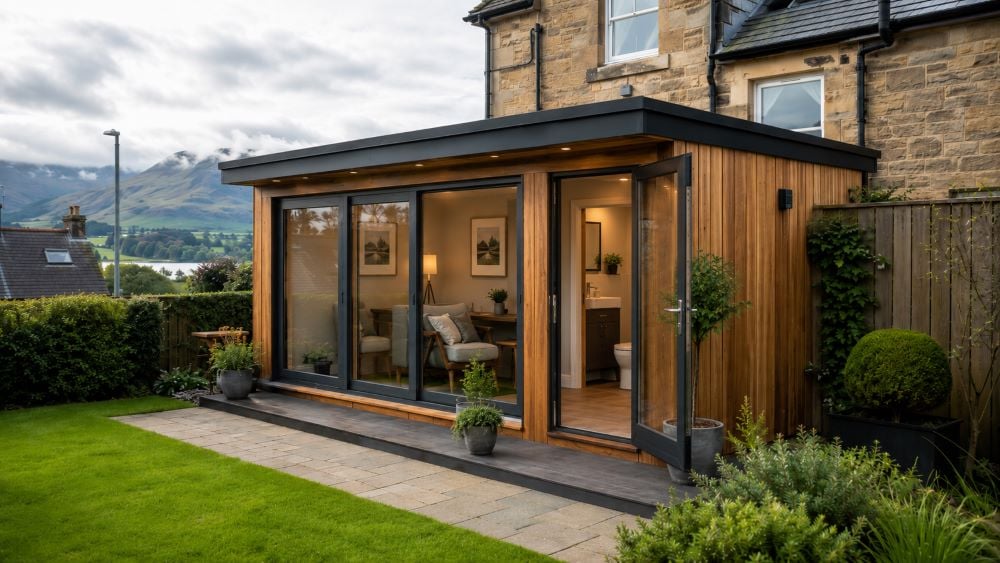
This is where buyers need to slow down. A cabin for occasional overnight use needs more than extra floor area. It needs better zoning, privacy, heating strategy, ventilation, and a more serious conversation about planning and compliance than people often expect.
Step 2: match the cabin to your garden size
A bespoke cabin should fit the garden and the way you move through it.
| Garden situation | Best approach | Common mistake |
|---|---|---|
| Small or awkward garden | Keep the footprint disciplined and prioritise layout efficiency | Choosing too much depth and losing the garden |
| Medium family garden | Balance cabin size with patio, lawn, and sight lines from the house | Treating the cabin like a separate project instead of part of the garden |
| Larger garden | Create zones for work, relaxing, or guests | Overspending on size when a better layout would do the job |
A good rule is this: leave breathing room around the building visually as well as physically. A cabin can be technically the right size and still feel too dominant if it kills light, outlook, or flow.
Step 3: understand wall thickness and insulation properly
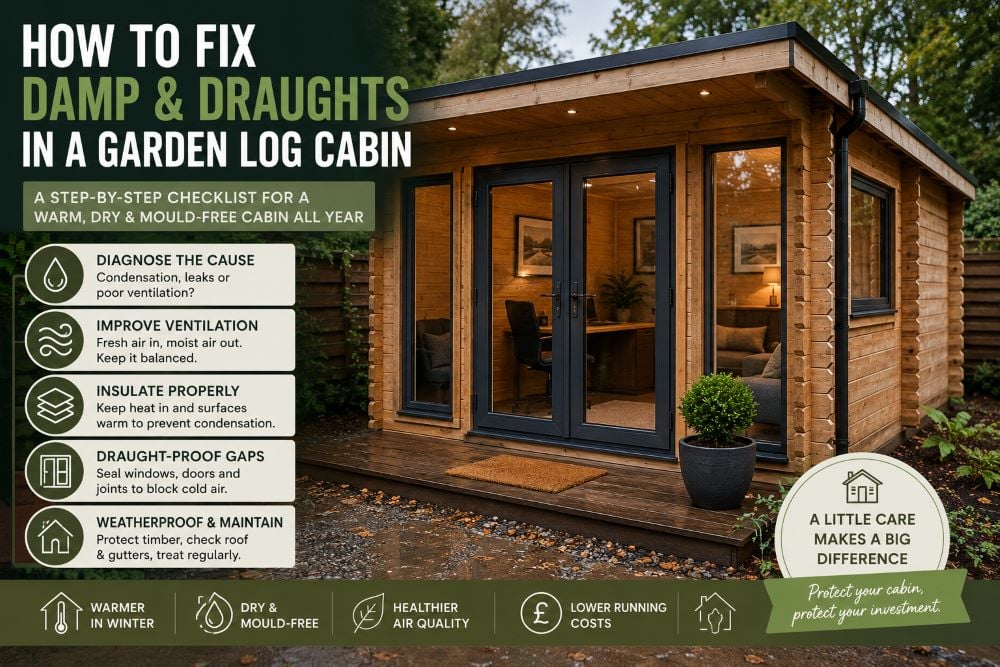
This is where a lot of bad buying decisions happen. Wall thickness on its own is not the full story, but it is part of it. If you want a cabin that feels comfortable through more of the year, floor insulation, roof insulation, glazing quality, draught control, and overall build detail matter just as much.
A simple way to think about it
- Light summer use: a lighter specification may be fine
- Regular multi-season use: stronger wall thickness plus insulation matters
- Year-round office or guest use: treat insulation and build quality as essential, not optional
Do not cheap out on insulation if the cabin is meant to solve a real life problem. A cold office or guest room is not a saving. It is a future regret.
Step 4: get the layout right before you think about finishes
The right layout depends on the main use.
Best layout questions to ask
- Where will the door go, and how will you walk into the space?
- Do you need one room or two?
- Will glazing create light or just glare?
- Do you need wall space for a desk, bed, storage, or TV?
- Would a corner design use the plot better?
- Do you want a front-facing social room or a more private retreat?
Smart layout choices by use
Small-garden cabin: Keep circulation simple. Avoid too many windows if wall space is limited. Use glazing where it helps the room feel bigger.
Home office cabin: Prioritise desk wall space, socket locations, screen glare control, and practical storage. One badly placed window can ruin a working layout.
Guest cabin: Think in zones. Sleeping, sitting, and washroom or utility needs should not all be fighting for the same footprint.
Step 5: bespoke vs pre-designed garden cabin options
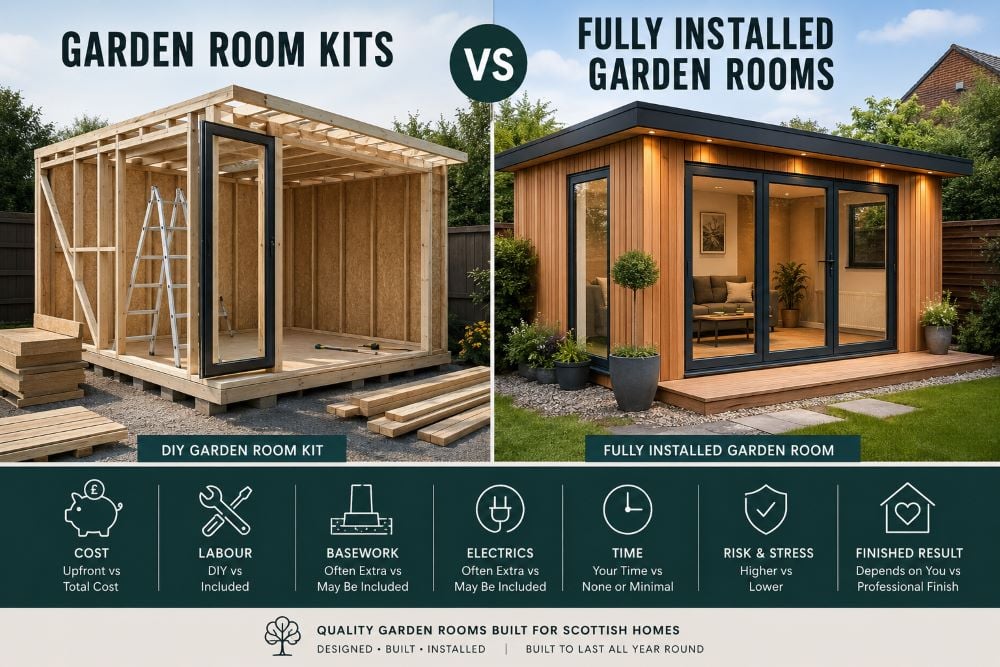
Not every buyer needs a fully bespoke design. Sometimes one of the better pre-designed garden cabin options is the smartest route. If the footprint, door position, and use case already work, a proven design can reduce decision fatigue and keep cost under control.
Go bespoke when:
- Your garden shape is awkward
- Access is tight
- You need a very specific internal use
- You want to match an existing house or garden scheme
- Standard glazing or door positions do not work
- You need a stronger premium finish or upgraded build spec
Go pre-designed when:
- The use is straightforward
- The plot is regular
- Speed matters
- The standard layout already does the job
The best suppliers do not force everything into “bespoke” just because it sounds premium. They help you work out whether bespoke is actually necessary.
Step 6: how to choose a premium timber log cabin supplier
There are plenty of sellers. Fewer proper advisors.
1. Do they help with the whole decision, not just the building?
A proper supplier should guide you on use, layout, access, insulation, basework, electrics, and installation.
2. Are their photos real?
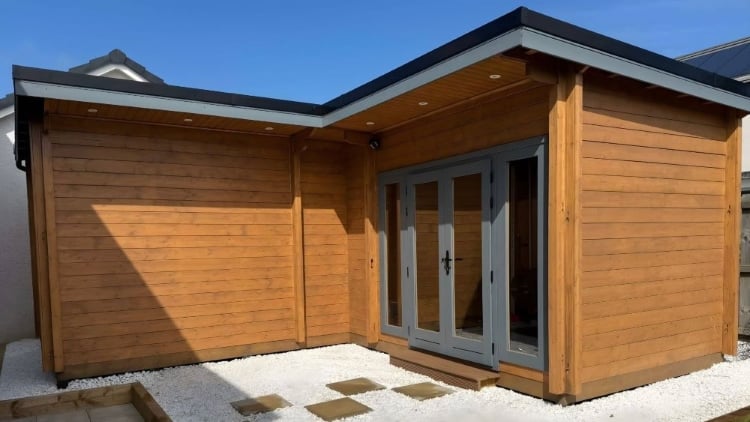
This matters more than people think. Real projects tell you far more than polished generic renders.
3. Can they explain why one spec suits you better than another?
If the answer is just “this one is popular”, that is weak.
4. Do they offer insulated build options?
For serious use, this is not a luxury.
5. What guarantee do they stand behind?
For a premium buy, a meaningful structural guarantee matters.
Logspan is not trying to be the cheapest. The message is simple: buyers who want lasting value, better guidance, real projects, and insulated build options should choose properly the first time.
Step 7: the three best-fit routes for UK buyers
Route 1: small garden, biggest impact
Choose a compact footprint, efficient layout, and disciplined glazing. Focus on calm, usefulness, and keeping the garden feeling open.
Route 2: proper home office
Choose a cabin specified for real work. Prioritise insulation, comfort, electrics, and a layout that supports focused days.
Route 3: occasional guest accommodation
Choose a larger, better-zoned cabin and treat legal checks seriously before buying. Comfort and compliance matter more here than visual style.
Common mistakes buyers make
- Buying on looks before function
- Underestimating insulation needs
- Choosing a footprint that overwhelms the garden
- Ignoring access and base constraints
- Assuming guest use is the same as office or leisure use
- Comparing only headline price instead of full installed value
How to choose the right bespoke garden log cabin for your situation
If you want a straightforward answer:
- Small garden: choose efficiency over size
- Home office: choose comfort and insulation over appearance alone
- Guest accommodation: choose proper zoning and legal clarity over speed
That is the real decision framework.
Why buyers choose bespoke timber log cabins
People choose bespoke timber log cabins because standard buildings often get close to the answer, but not close enough. The door is wrong. The windows are wrong. The footprint wastes space. The spec is not strong enough. Bespoke works when it removes compromise that would otherwise annoy you for years.
Final thought
The best garden log cabins UK buyers end up loving are not the ones with the longest feature list. They are the ones designed around real life.
- The right size for the plot
- The right layout for the job
- The right insulation for how often it will be used
- The right supplier to guide the process properly
If you get those four right, the cabin becomes part of how you live, not just another thing you bought.
Related pages
Talk to Logspan about the right layout and build spec
If you are weighing up small garden space, a garden office, or guest use, the right decision starts with layout, insulation, and how you actually want to use the building.
Frequently asked questions
What is the best wall thickness for a garden log cabin in the UK?
For more regular all-year use, 44mm is commonly treated as a sensible starting point, but wall thickness alone is not enough. Floor insulation, roof insulation, glazing, draught control, and overall build detail matter as well.
Are bespoke garden log cabins worth it?
Yes, when the plot is awkward, the use is specific, or standard layouts create compromises. If a pre-designed model already fits the job well, that can still be the better buy.
Can I use a garden log cabin as a home office?
Usually yes, but the specification matters. For regular work, insulation, electrics, glazing, and layout should be planned around real daily use, not occasional use.
Can I use a garden cabin for guest accommodation?
Potentially, but treat this as a separate legal and specification question. Sleeping accommodation brings extra planning and building considerations, so check with your local authority before committing.
Is a bespoke cabin always better than a pre-designed one?
No. Bespoke is better when it solves a genuine problem. If a pre-designed layout already fits the garden and the use, it may be the smarter route.